
Every age believes it understands war.
Men train for it. States prepare for it. Commanders study the last one and assume the next will resemble it closely enough to manage. This belief survives until the moment it fails — and when it fails, it does so without warning, explanation, or mercy.
War does not announce when it has changed.
It allows men to discover it in the middle of the fight.
I have seen this moment repeat itself across centuries: the instant when courage is no longer sufficient, when experience offers no guidance, when the inherited rules collapse under fire. It is not marked by banners or proclamations. It is marked by confusion — and then by silence.
The dead are usually the first to understand.
The living follow.
When Discipline Was No Longer Enough
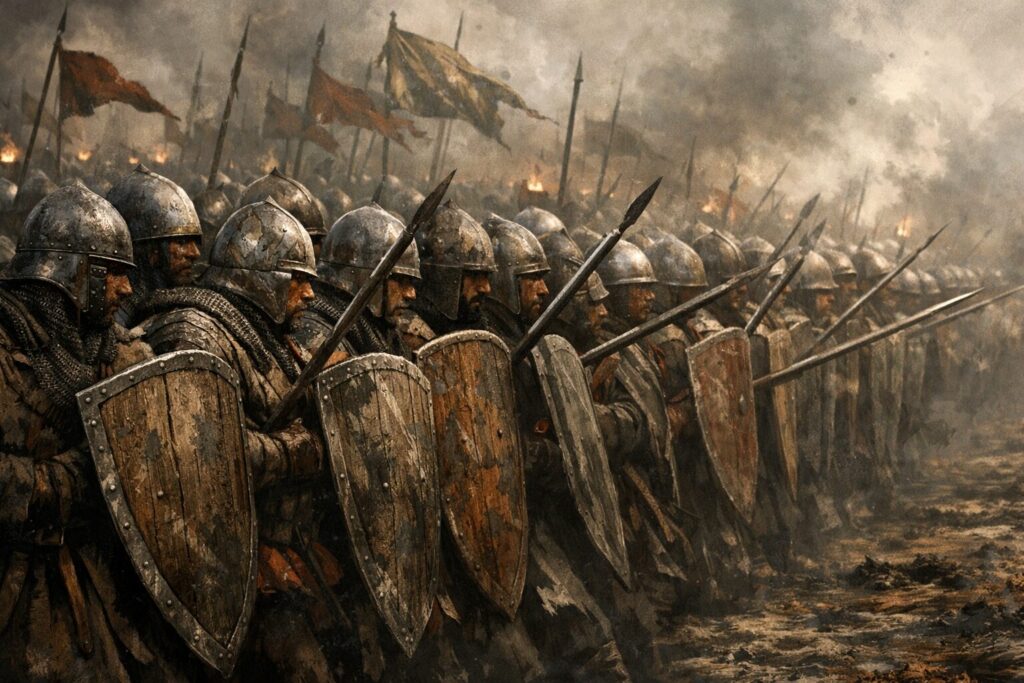
There was a time when war belonged to formation and resolve. Men advanced shoulder to shoulder, trusting that order itself was protection. Discipline was survival. Courage was currency.
Then the killing began to arrive faster than the formation could absorb.
Lines broke not because men fled, but because standing together no longer mattered. The ground filled with bodies that had done everything asked of them. Training had not failed — it had simply become obsolete.
This is the first recognition most armies encounter: the realization that valor can be rendered irrelevant.
Men do not abandon discipline willingly. They abandon it only after it stops saving them.
When Protection Became a Lie
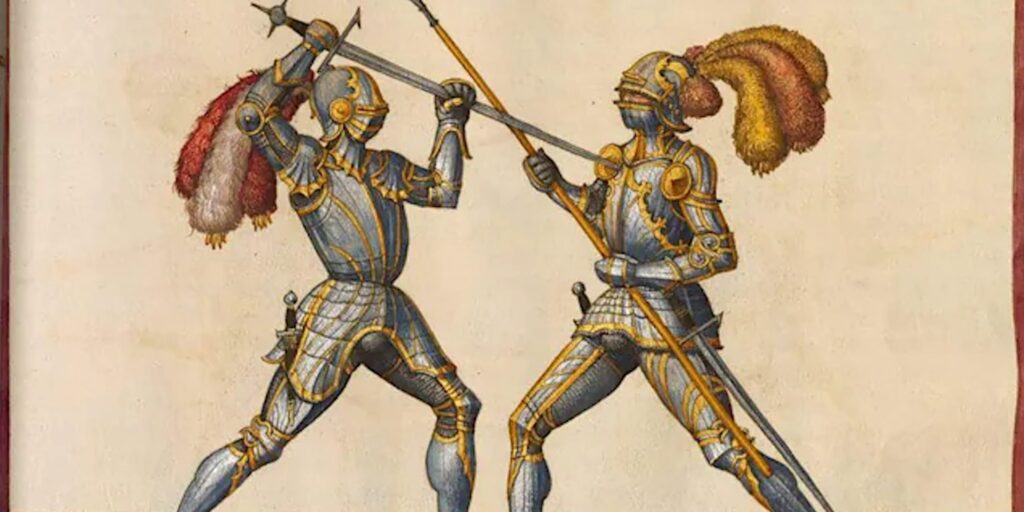
Armor once carried meaning beyond metal. It signaled status, preparation, a promise that experience could still blunt fate. To wear it was to believe that war remained, at least partially, negotiable.
Then came the moment when armor no longer protected the man inside it — only delayed his death.
Blades found gaps. Shot ignored lineage. Rank ceased to matter. What had once distinguished leaders now merely identified targets.
Armor did not disappear overnight. It lingered, stubborn and symbolic, long after its purpose had passed. Men wore it not because it worked, but because admitting it no longer did was unbearable.
Every generation carries its own armor long past its usefulness.
When Speed Replaced Strength
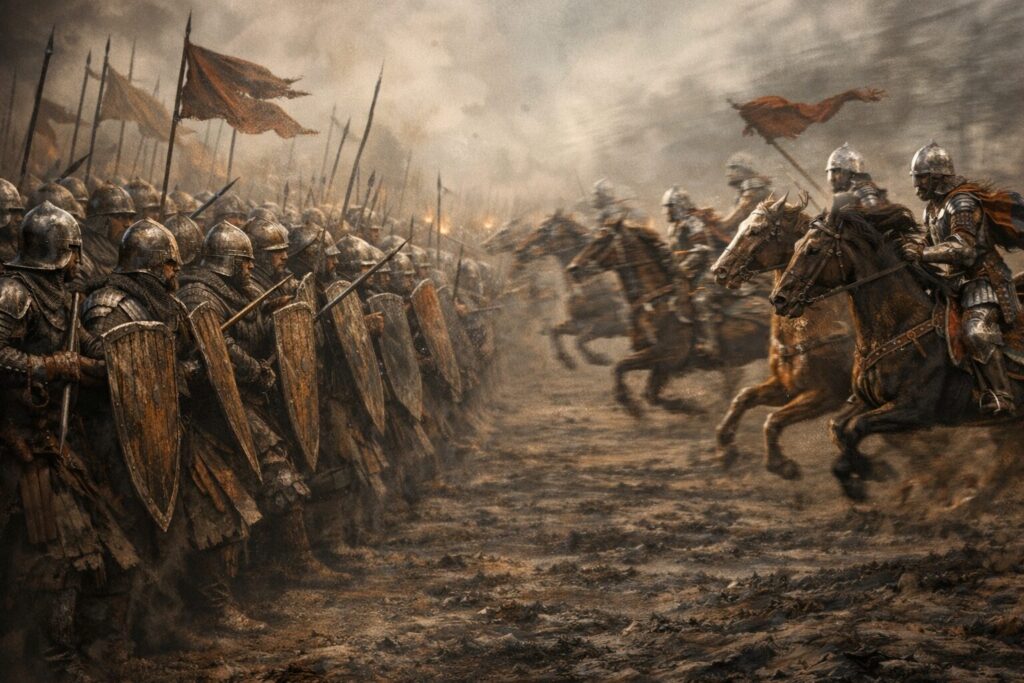
For centuries, mass decided battles. Weight, numbers, endurance — these were the currencies of victory. Armies moved deliberately because war moved slowly.
Then war learned to move faster than orders.
Victory no longer belonged to the strongest force, but to the one that could reposition, exploit, and disappear before command could respond. Battles ceased to be fixed events and became fluid problems.
This was not a failure of leadership. It was a failure of time.
Commanders did not lose control because they lacked skill. They lost control because war no longer waited to be controlled.
When the Sky Entered the Fight
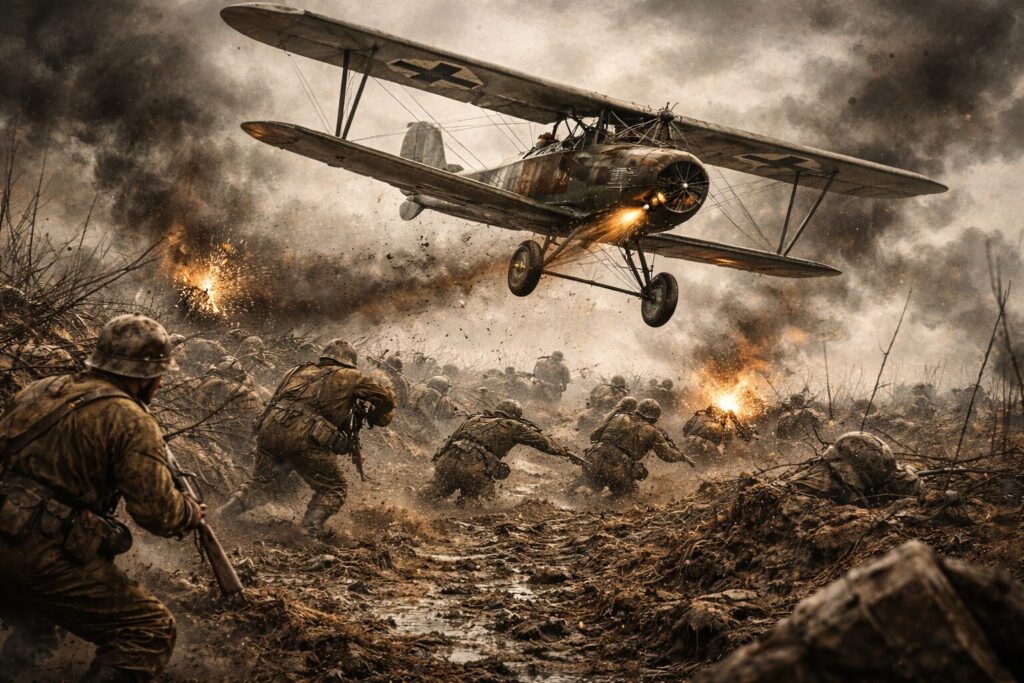
There was a moment — brief, disorienting — when soldiers first looked upward and understood that war had acquired a new direction.
The sky had once been neutral. It offered weather, not threat. Distance and rear areas still carried meaning.
Then war began to arrive without footsteps.
For the first time, men realized there was nowhere to rest that could not be reached. There was no true rear. No pause untouched by violence. War no longer approached — it appeared.
From that moment forward, the battlefield was no longer a place. It was a condition.
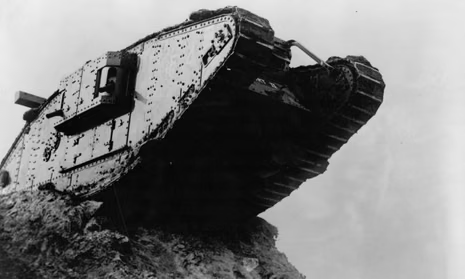
When Machines Outpaced Men
Machines did not frighten soldiers at first. Soldiers adapt quickly to noise and steel. What unsettled them was something quieter: indifference.
The machine did not tire. It did not hesitate. It did not care who stood in front of it, only whether the path was clear. Men learned that endurance no longer mattered — only tempo.
Those who could not keep pace were not defeated. They were simply bypassed.
This is the moment many armies mistake for a tactical problem. It is not. It is an existential one.
When war accelerates beyond human rhythm, survival becomes accidental.
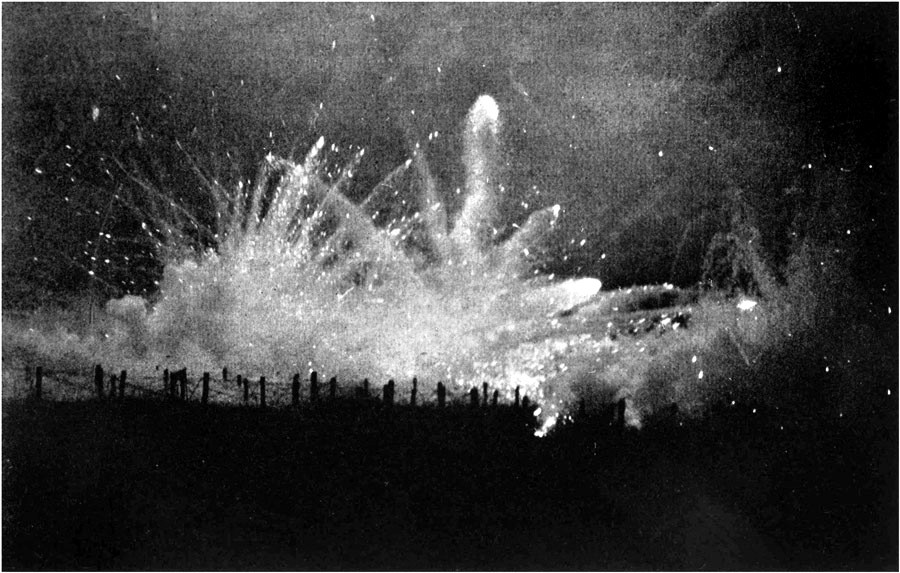
When Distance Became Intimacy
There was a time when killing required proximity. You saw the man. You heard him. You bore witness to the act itself.
Distance was supposed to make war cleaner. It did not. It made it quieter.
Men discovered that separation did not reduce consequence — it redistributed it. The act became easier. The memory did not. Guilt traveled just as far as the weapon.
War learned how to strike without presence. Men learned that absence did not mean absolution.
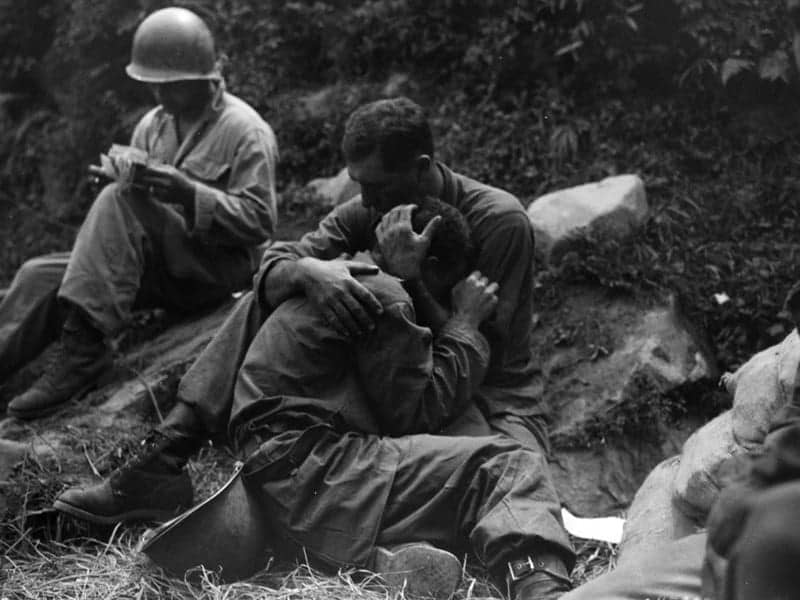
The Pattern Men Refuse to Learn
Each generation believes it will recognize the change in time.
Each generation studies the last war, refines its lessons, and prepares to fight it better. And each generation is surprised when the next war arrives wearing a different shape.
War does not evolve to be fairer.
It evolves to be efficient.
The tragedy is not that war changes. The tragedy is that men insist on greeting each change with confidence instead of humility.
I have watched soldiers fight wars they were trained for — and die in wars they did not yet recognize. I have seen courage spent where it no longer purchased survival, and loyalty honored long after usefulness had passed.
The war always changes first.
Men change only after the cost is paid.
That is how it has always been.
That is how it remains.
— Friedrich Bargideon